Selected work.
Yacht websites and listing relaunches through YachtAddress, independent market analysis, local support for international brokers in the Gulf, and a book. Client projects and concept studies are kept apart.
YachtAddress projects
All case studies on yachtaddress.comClient projects
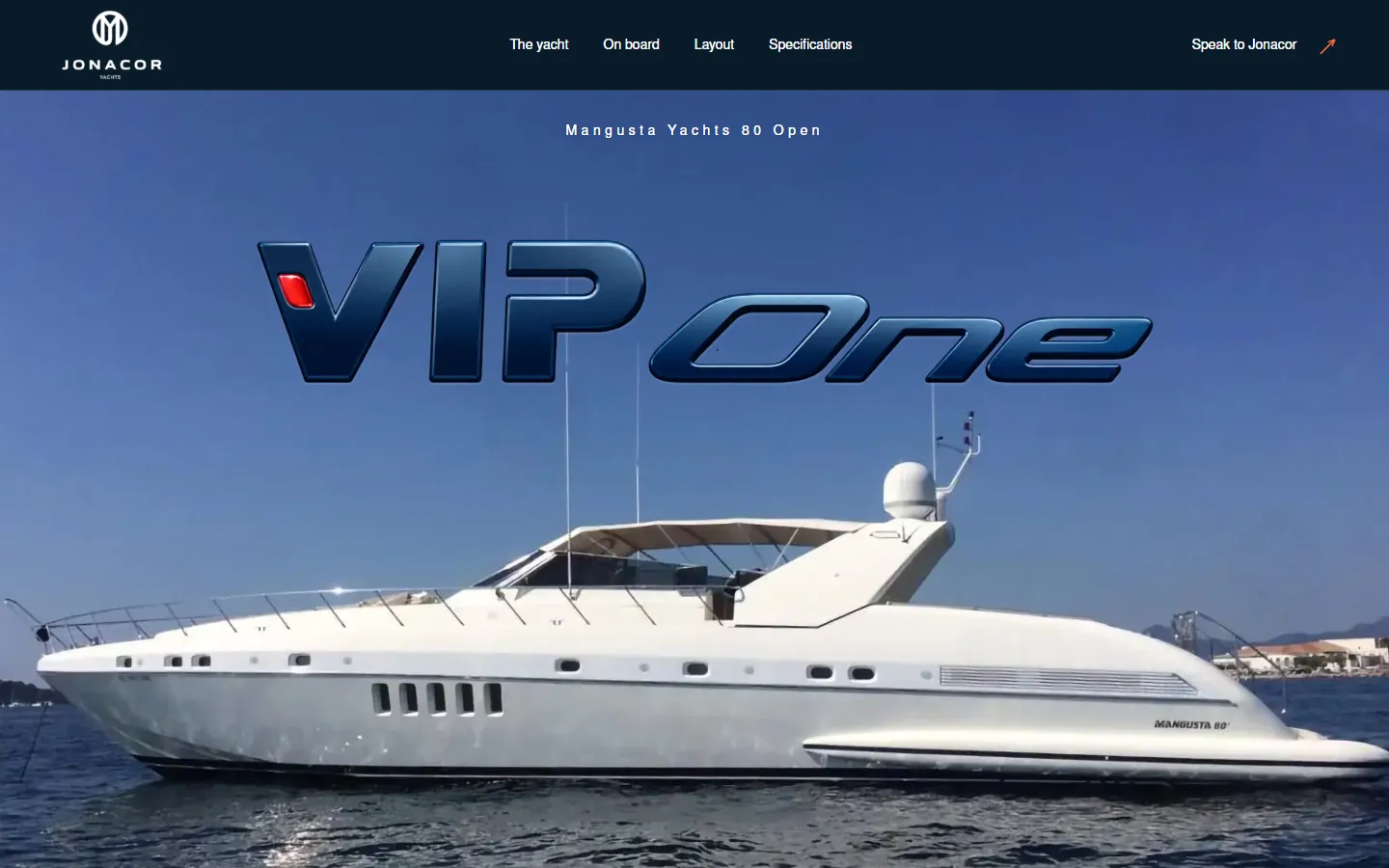
EL VIP ONE
Mangusta 80 Open, 25.05 m, 1999. Central agent Jonacor Yachts. The experience of a Maxi Open: a low, long profile, strong performance and time spent outside.
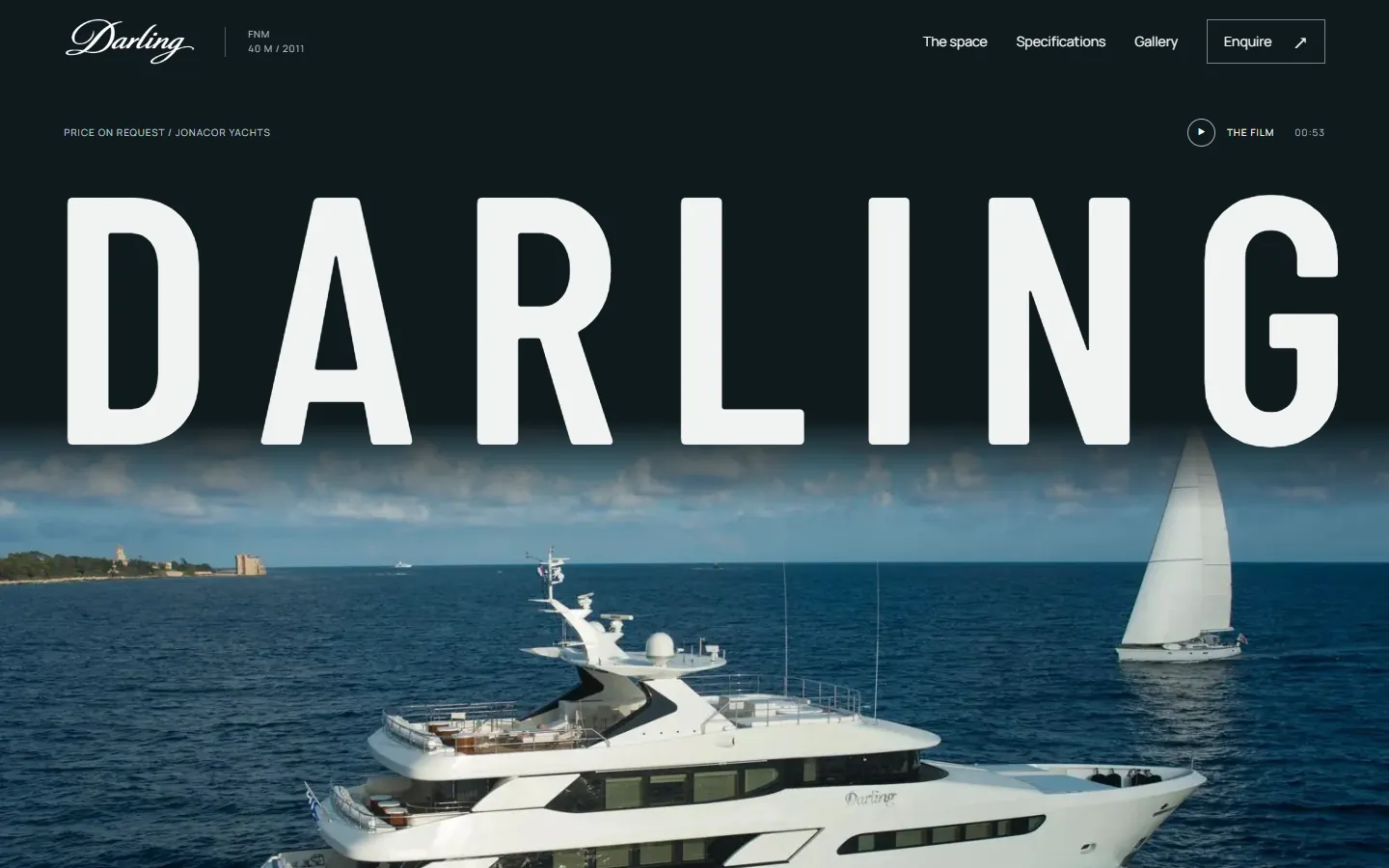
DARLING
39.6 m, 431 GT, 2014. Central agent Jonacor Yachts. 431 GT within 39.6 metres: an eight metre beam told as space a buyer can walk through.
Concept studies
Self initiated, not commissioned. No sales or enquiry results are claimed.
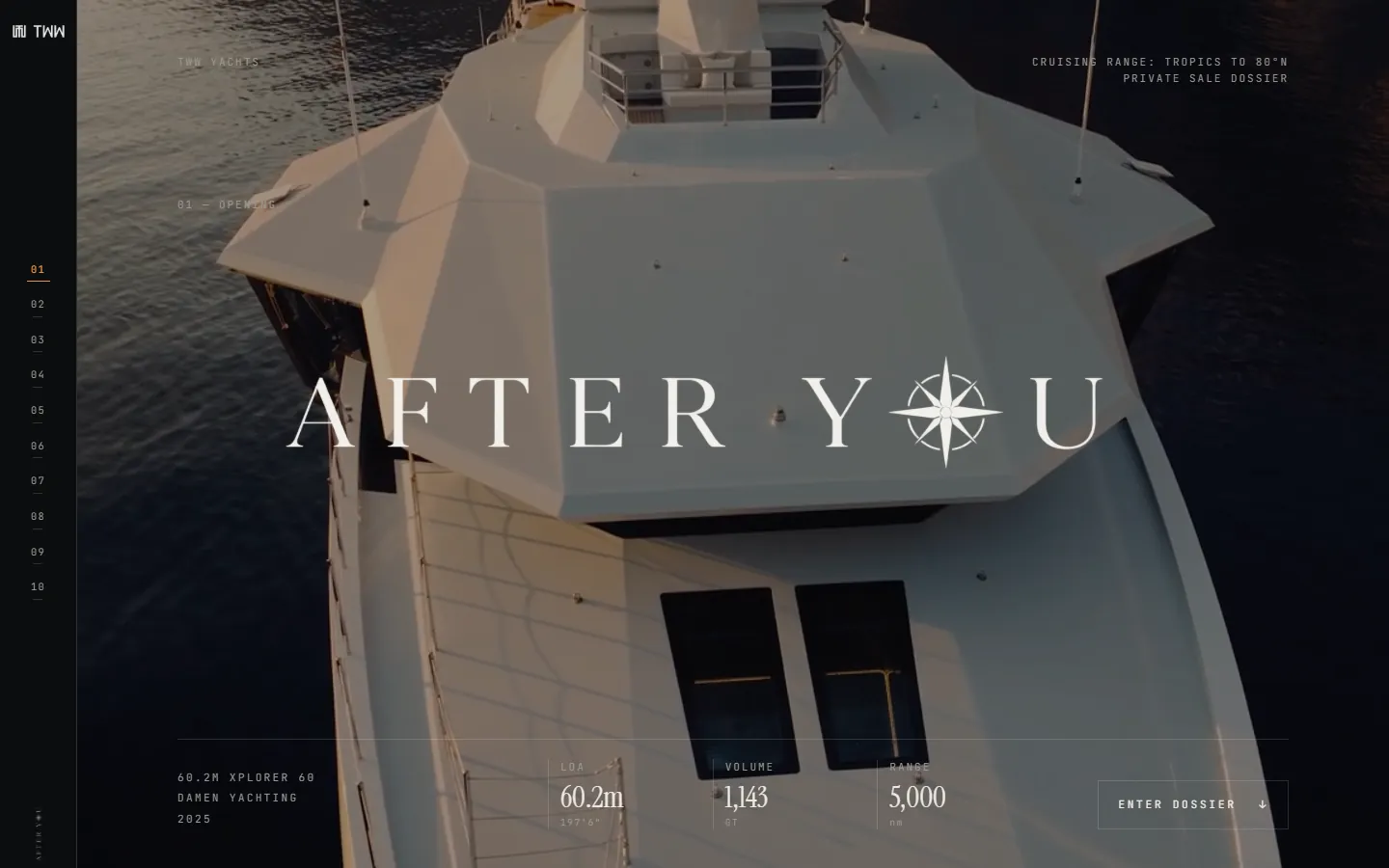
AFTER YOU
60.2 m Damen Xplorer. An explorer needs a dossier: capability, range and arrangements inside one buyer journey.
LUMIÈRE
Family charter, Mediterranean. A family week on board: who sleeps where, how the days unfold, what the charter costs involve.
ENERGY
77.8 m Amels. Restraint as a design decision for an informed buyer who is already comparing the market.
AND ART
Evadne Yachts, 25 m, 2020. More yacht than the length suggests: arrangements and usable areas carry the story.
Independent analysis
Written market analysis a broker can put on the owner's table. Separate from YachtAddress, fee based, no listing inventory.
Yacht Pricing Reality Check: evidence for the owner meeting
Comparables, time on market and segment movement, written up as a neutral document the broker can hand to the owner, so the broker is not the only voice carrying hard news.
Yacht Seller Advisory for owners selling through a broker
How to prepare the yacht and the paperwork, set a price the market takes seriously, choose a central agent and back them, and what to expect month by month.
GCC broker support
Local meetings, viewings and written visit summaries in Dubai and the Gulf for international brokers with an active case. The appointing broker remains the commercial lead.
How a local assignment worksThe book
What They Don't Tell You Before You Buy a Yacht. A Critical Yacht Buyer's Guide, written for buyers, owners, family offices and people entering the industry.
Books and writingHow a listing gets worked on
The same six steps, whether the yacht is 24 metres or 60. What changes is the argument.
Read the listing like a buyer
The public link, on a phone, with the three yachts a buyer would have open next to her. What does the first screen say, what does it not say, what do I have to ask for.
Find the argument
One sentence the right buyer should remember after the first screen. A Mangusta Open and an explorer answer that differently, and the whole presentation follows from it.
Put the evidence on paper
Comparable listings with their days on market and price history, the reasoning behind the asking price, what buyers said. Written for the owner meeting, not for a brochure.
Build her own address
A website for the one yacht, with the facts, the plans, the documents and the broker's number, kept current when price, location or photographs change. Through YachtAddress.
Launch and distribute
The link the broker sends, personal links for co-brokers, the QR code on the berth at a show, the portal listings corrected first. In that order.
Report and review
The owner opens their own view whenever the question comes up. The monthly report shows numbers, sources and the work done, without buyer names. The mandate review is prepared sixty days out.
What a project can include
Pick what the listing needs. Most start with the review and one yacht.
Listing review
Written notes on one listing: position, argument, three changes in order. Free, from the public link.
Sales story and copy
The lead argument, the first paragraph, brochure and website copy rewritten around it.
Photo order and material
Which photograph leads, what is missing, what the GA plan and the documents need to look like on a phone.
Pricing evidence
Comparables, time on market and segment movement, set out as a neutral document for the owner.
The yacht's website
One permanent address per yacht, maintained for the sales period, with Listing Pulse for the broker.
Co-broker presentations
A live presentation per co-broker under their own name, enquiries routed to them.
Owner reporting
Owner view and monthly report. Numbers and sources, no buyer identities, no broker notes.
Local support in the Gulf
Meetings, viewings and written summaries in Dubai and the GCC for an international broker.
Two listings, two arguments
EL VIP ONE was a 1999 Mangusta 80 Open with Jonacor Yachts as central agent. The owner started with an ambitious price, the portals brought casual enquiries, and the yacht's age was the first thing anyone saw. The website could not change the build year. It could give the right buyer room to understand what a Maxi Open is for: the low profile, the run, the day spent outside. Portal visitors were sent to that one page instead of a card between forty others. The brokerage received fewer enquiries, and the ones who wrote knew what they were asking about. She has since sold; the website did not sell her, the broker did, and the page made that conversation shorter.
DARLING is a 39.6 metre with 431 GT and an eight metre beam, also with Jonacor Yachts, and still for sale. She had been on the market for a long time when her website was built, so a new page could not reset that history. The argument became her volume: what the beam does in the saloon, the full beam owner's suite, three exterior levels, five guest cabins and seven crew. The broker keeps location, asking price and Open Day announcements current through Listing Pulse while she continues to cruise.
The two pages share nothing but the structure of the thinking. That is the point. A website shaped by the yacht is the only kind worth building.
Questions about the work
What do you need from me to start?
The public link of the listing. For the full work: approved facts and pricing, the photography, film and documents you already have, a named broker and someone who can sign off the presentation.
How long does it take?
The written review takes a few days. A yacht website and the material around it are usually live within weeks of the facts being approved, depending on how quickly photography and documents arrive. Timelines are agreed per project on yachtaddress.com.
Who owns what?
The brokerage owns the mandate, the owner relationship and every buyer. The yacht's website and Listing Pulse are services delivered to the brokerage. Nothing I do routes an enquiry around the broker.
Do you work with owners directly?
Mostly through their broker. Where an owner wants a defined independent analysis, that is a separate, fee based engagement and the broker knows about it.
Where are the prices?
On <a href="https://yachtaddress.com/pricing/" rel="noopener" data-ya-link>yachtaddress.com/pricing</a>. They change there, not here.
Have a yacht, a market question or an idea worth discussing?
A short introductory conversation costs nothing. Write to me, or send the public link of a listing and I will tell you what I see.